Actions
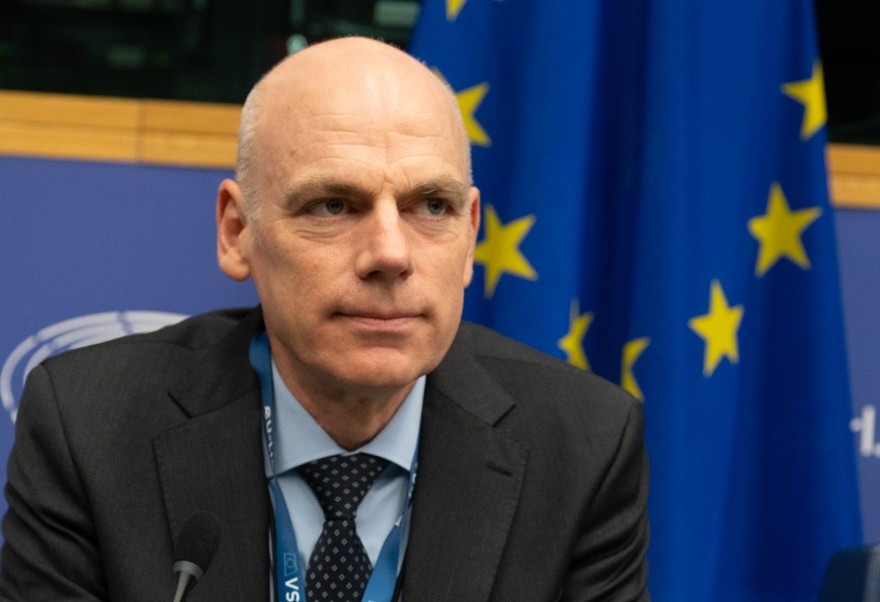
On 9 September 2026 in Strasbourg, eu-LISA Executive Director Tillmann Keber opened the eu-LISA Industry Roundtable 2026: Data Management, bringing together representatives from industry, Member States, EU institutions and agencies, and academia to exchange perspectives on current and future data management challenges.
Good morning to all of you, and welcome to this year’s eu-LISA Industry Roundtable.
It is a pleasure to welcome you here in Strasbourg, in this unique and symbolic venue, the European Parliament, as well as those of you joining us online from across Europe and beyond.
From eu-LISA’s side, we are also here as neighbours, with our new Strasbourg offices just a hundred metres away. The European Parliament is a key partner for us. It adopts the regulations that we implement and has an important role in our annual budget and the discharge of the Agency.
I am particularly pleased to see such a broad community represented here today: colleagues from Member States, EU institutions and agencies, academia and, of course, our industry partners.
At eu-LISA, we serve Europe through technology. Our mission is ultimately about helping Europe remain secure and open by providing and operating the digital capabilities that support border management, migration, asylum, justice and law enforcement.
And data is at the heart of everything we do.
Why Industry Roundtables?
The Industry Roundtable has been part of eu-LISA’s tradition since 2014. It has become a platform where our stakeholders come together to exchange views, share experience and look ahead at the technologies that will shape our common future.
Quite simply, we cannot build the future of Europe’s digital infrastructure alone.
We need the experience of Member States, the perspective of European institutions and agencies, the research community to help us understand where technology is heading, and industry to help turn innovation into reality and bring solutions to the table.
From this perspective, the Industry Roundtable is not simply an event. It is also a platform for dialogue and collaborative design.
I hope the next two days will inspire open discussions about the opportunities, challenges and constraints we face and need to address together to make data management more efficient, while remaining fully compliant with the legislative framework.
Why data management?
Why did we choose data management as the theme of this year’s Roundtable?
The answer is simple. The importance of data for public administrations has grown enormously, particularly over the past two decades, while managing increasingly large and complex volumes of data has become more demanding.
EU institutions and Member State authorities increasingly rely on complex digital solutions that depend on data being available, reliable, secure, interoperable and usable throughout its lifecycle.
eu-LISA manages some of Europe’s most critical large-scale IT systems. These systems support the daily work of border guards, police officers, visa, migration and asylum authorities, and judicial authorities across Europe.
Today, the value of these systems depends not only on the technology that operates them, but also on the quality and management of the data flows behind them.
eu-LISA’s role in data management
At eu-LISA, we are not simply operating existing IT systems. As my colleagues will explain during the first session, we host data belonging to Member States.
Data is a key asset, and we need to look for ways to manage it using modern methods and technologies and, where appropriate, translate innovation into operational capabilities.
This includes supporting interoperability and making effective use of information across the European justice and home affairs landscape.
The way we approach data today will influence the capabilities of European digital public services tomorrow.
Data is changing, and so is the way we manage it
When we talk about data management, I see three important changes taking place.
First, the volume and complexity of data are increasing
Our large-scale IT systems process enormous amounts of data coming from different sources, Member States and operational environments.
To give just a few examples, the Schengen Information System contains around 95 million alerts, with some two million searches performed every hour across Europe. The Visa Information System contains around 50 million visa applications. By mid-August, the Entry/Exit System, which entered into operation in October 2025, had already recorded around 76 million passenger records.
These figures illustrate the scale of the systems managed by the Agency and the volume of data involved.
Managing this information effectively means much more than storing data. We need to ensure its quality, protect it securely and make it available only to the right users, at the right time and in accordance with legislation.
Second, data is becoming increasingly interconnected
One of the most important developments in Europe’s large-scale IT systems has been the move towards greater interoperability and information exchange, connecting systems that previously operated more independently.
This creates opportunities to provide better services to the professionals using our systems, while improving security in the Schengen area and facilitating legitimate movement across Europe.
But it also creates new challenges. As interoperability increases, questions of governance, quality, security, compliance and accountability become even more important.
Third, data is becoming a critical asset for policymaking and decision-making
Data analysis is increasingly part of the way organisations make sense of information and support policy and decision-making.
Today, many of our institutional stakeholders, including the European Commission, the Council and other agencies operating in the justice and home affairs domain, increasingly seek aggregated statistical data from our systems to support EU policies and decision-making.
This creates clear obligations for us.
We must ensure that access to statistical information complies fully with the legal framework governing each system and with applicable data protection requirements.
We need common standards that define what constitutes good-quality data, and we need to ensure that statistics are supported by effective data governance, traceability, appropriate access controls and reliable underlying data.
In this respect, efficient data management is not simply a “nice to have”. It is a prerequisite for the responsible and effective provision of statistical data and analysis.
This is why data management is no longer simply an IT topic. It is a strategic issue for public administrations.
How does the Industry Roundtable address these changes?
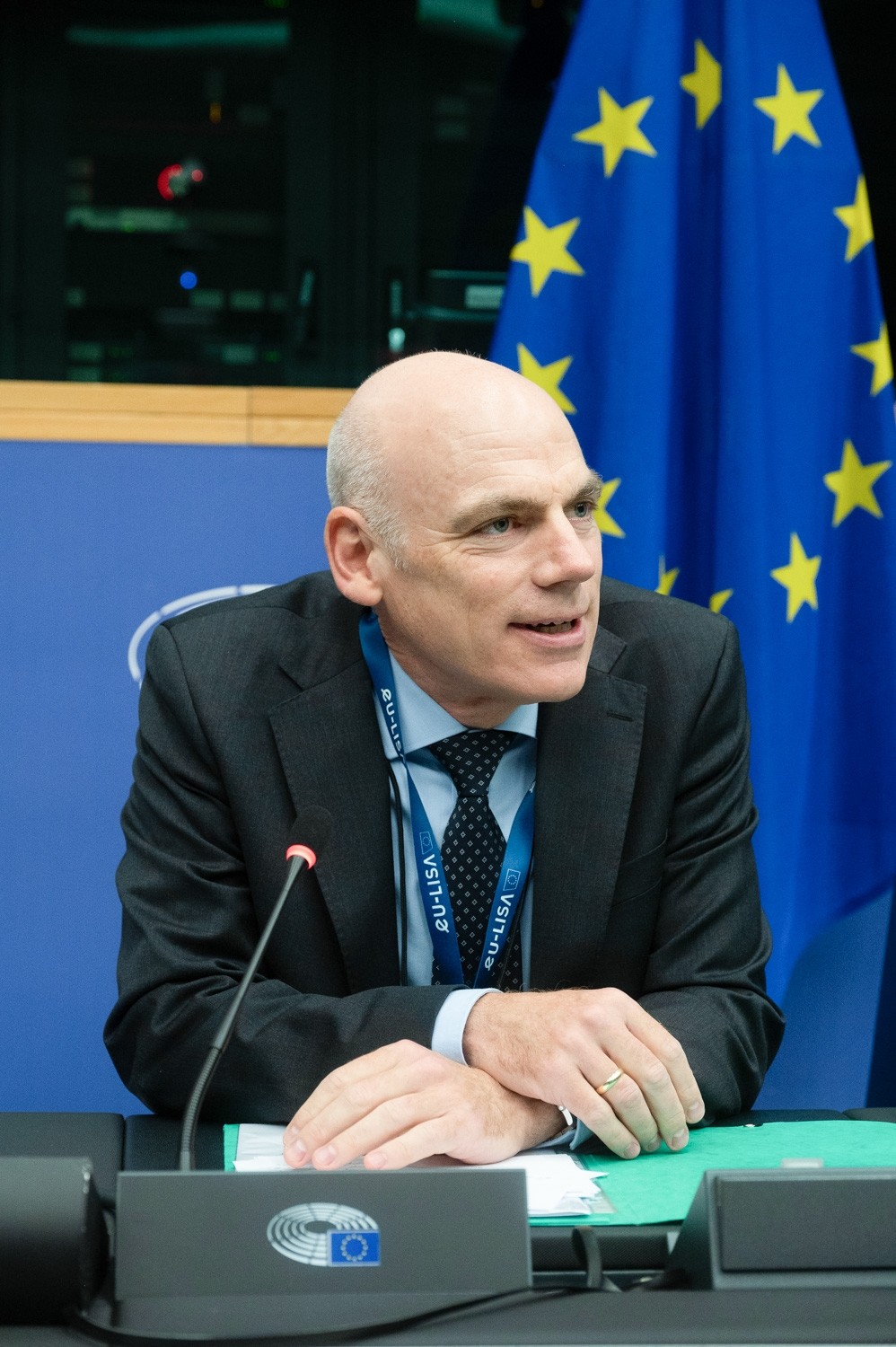
This year’s programme reflects the evolution of the Agency’s approach to data management.
During these two days, we will look at the experience of Member States and institutions: what is changing, what lessons have been learned and where the main challenges lie.
We will examine data governance and compliance by design, which are particularly important in the public sector, where innovation must go hand in hand with the protection of fundamental rights, security and legal compliance.
We will discuss secure and scalable data architectures that can grow with our needs while remaining secure, resilient and operationally sustainable.
We will explore data sharing, including how data can be exchanged and used effectively across organisations and national boundaries on the basis of trust, common approaches, interoperability and appropriate governance.
And we will look at data analytics and AI readiness, including how value and knowledge can be extracted from anonymised and aggregated datasets.
The role of industry
From industry, we want to understand what is possible, which solutions are mature today and where the constraints lie.
Which technologies are ready to be deployed at European scale?
Public administrations have very specific requirements. We operate in highly regulated environments. Ensuring the security and resilience of the sensitive data we host is one of our highest priorities. Data quality is essential for interoperability. We must ensure transparency, accountability and data protection.
And we need solutions that can operate reliably over the long term, not simply technologies that perform well in a demonstration.
I therefore encourage you to be concrete. Share your expertise and experience. Tell us what works and what does not. And give us your perspective on how technology is evolving.
What do we hope to achieve?
First, knowledge sharing. I hope everyone leaves with a better understanding of what eu-LISA is doing in data management, what other public institutions are doing in this area and what technological solutions are possible.
Second, new connections. Some of the most valuable outcomes of events like this often come from the conversations that take place between the formal sessions.
And third, concrete ideas for cooperation. We should leave this Roundtable with a clearer view of where technology can help us improve the way Europe manages and uses data, and how we can overcome the challenges we face.
Ultimately, the objective is to understand how technology, governance, people and processes can come together to create better public services.
Conclusion
At eu-LISA, we firmly believe in the value of knowledge sharing and communication, which lies at the heart of these Industry Roundtables.
These events give us an opportunity to step outside our day-to-day operational responsibilities, look ahead and ask ourselves a simple but important question:
How can we use technology better to serve European citizens?
I am convinced that the best answers will come from working together across institutions, Member States, industry and academia.
Thank you for being here, for sharing your expertise and for your continued partnership with eu-LISA.
I wish you all a very productive and stimulating Industry Roundtable, and I look forward to the outcome of our discussions over the next two days.