• eu-LISA Annual Activity Report 2025

    Throughout 2025, the Agency continuously demonstrated its resolute commitment and reliability as a partner for the European institutions and the Member States, contributing to the implementation of relevant policies in the area of justice and home affairs (JHA), while also ensuring the safety and integrity of the technologies deployed. eu-LISA's main objective is to ensure effective, secure and continuous operation

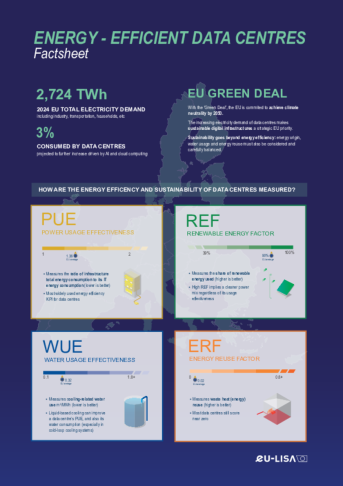
  • Energy-Efficient Data Centres - Factsheet

    Data centres are becoming an increasingly important part of the EU’s energy system, already accounting for around 3% of electricity demand, with further growth expected as cloud computing and artificial intelligence continue to expand. This factsheet provides a brief overview of key figures of the accompanying report, covering the energy efficiency and sustainability of data centres.

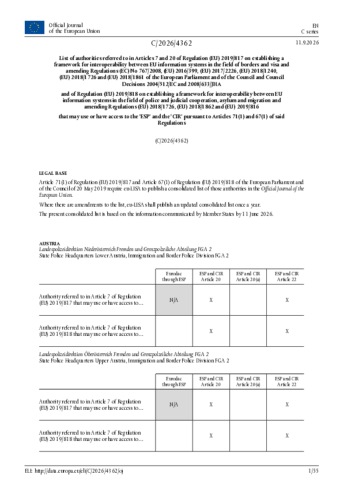
  • Eurodac - List of designated authorities with access to Central System data 2026

    Article 40(2) of Regulation (EU) No 2024/1358 of the European Parliament and of the Council dated 14 May 2024 requires Member States to send to the Commission and eu-LISA a list of designated authorities accessing to, and rectifying or erasing of, data recorded in Eurodac for the purposes laid down in Article 1(1) points (a), (b), (c) and (j) of

  • Eurodac - Annual Statistics 2025 - Factsheet

    Eurodac is the centralised European database that stores and processes the digitalised fingerprints of asylum seekers and irregular migrants who have entered a European country. This helps determine the Member State responsible for examining an asylum application. This factsheet is a summary of the full report also published on this website.

  • EES Quarterly Report - Q4 2025

    eu-LISA publishes quarterly EES statistics covering overstayers, refused entries, cases where the authorisation for stay is revoked or extended, and exemptions from giving fingerprints.

  • Energy-Efficient Data Centres - A High-Level Overview

    Data centres are becoming an increasingly important part of the EU’s energy system, already accounting for around 3% of electricity demand, with further growth expected as cloud computing and artificial intelligence continue to expand. Against this backdrop, this report provides a concise overview of the current state of energy efficiency in data centres. It brings together insights from EU policy

  • Policy Brief: Independent Evaluation of Biometric Technology in the EU

    Independent evaluation is one of the most effective means to ensure that biometric systems deployed in the EU meet the necessary requirements for accuracy, robustness and transparency, according to standard performance metrics. However, today, the evaluation of biometric technology in the EU is fragmented and inconsistent. This Policy Brief argues that establishing an independent capability for the evaluation of biometric

  • 2026 Outlook: What's ahead?

    The year ahead is set to be just as significant as 2025, with the rollout of the new Eurodac, alongside ETIAS and ECRIS-TCN, marking the next key milestones in building a modern interoperability architecture for the EU’s domain of justice and home affairs. As always, we will continue to ensure a high level of responsiveness and availability across all existing