Actions
eu-LISA has published its latest quarterly report on the Entry/Exit System (EES), covering the period from 1 January to 31 March 2026.
Published in line with the EES Regulation, the report provides a regular overview of how the system is being used. It focuses on four areas: refusals of entry, revoked and extended authorisations for stay, and travellers exempt from providing fingerprints.
The figures should be viewed in the context of the gradual EES roll-out. During the first quarter of 2026, the system was not yet in use at every external border crossing point. The report therefore covers only data from locations where the EES was already operating and does not represent all travel across the Schengen area during the period.
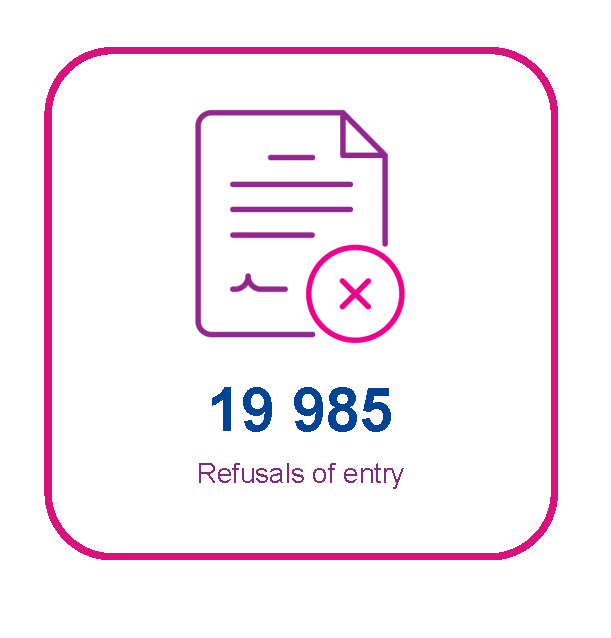
The figures include 19,985 refusals of entry, 11,885 extensions of stay, 665 revoked authorisations for stay and 978,940 exemptions from fingerprinting. These exemptions mainly concern children under the age of 12 and people for whom fingerprinting is physically impossible.
The EES digitally records the entry, exit and refusal of entry of third-country nationals travelling for a short stay in the Schengen area. It began operating on 12 October 2025 and was gradually introduced at external border crossing points before becoming fully deployed on 10 April 2026.
Why travellers were refused entry
Ukrainian nationals accounted for the highest number of refusals recorded during the quarter, with 4,771 cases. They were followed by nationals of Albania, with 2,245 refusals, and Moldova, with 1,706.
The most common reason for refusing entry was that the purpose and conditions of the planned stay had not been sufficiently justified, recorded in 7,202 cases.
A further 4,353 refusals concerned travellers who had already reached the maximum permitted stay during the relevant six-month period. Other common reasons included an entry-refusal alert in the Schengen Information System and the absence of a valid visa or residence permit.
Travellers aged between 20 and 30 formed the largest age group among those refused entry, followed by those aged 31 to 40.
Extensions and revocations of stays
Most extensions of stay concerned nationals of the United States, with 6,565 decisions recorded. Canada followed with 1,846 and Japan with 1,001.
The highest numbers of revoked authorisations concerned nationals of Türkiye, with 84 decisions, followed by China with 61 and Belarus with 58.
As not all entries and exits had yet been recorded, the report does not include figures on overstayers or the length of authorised stays. A breakdown by border crossing point is also not available for this quarter.
The full EES Quarterly Report – Q1 2026 provides further breakdowns by nationality, age and sex, as well as the reasons recorded for refusals of entry.