Actions
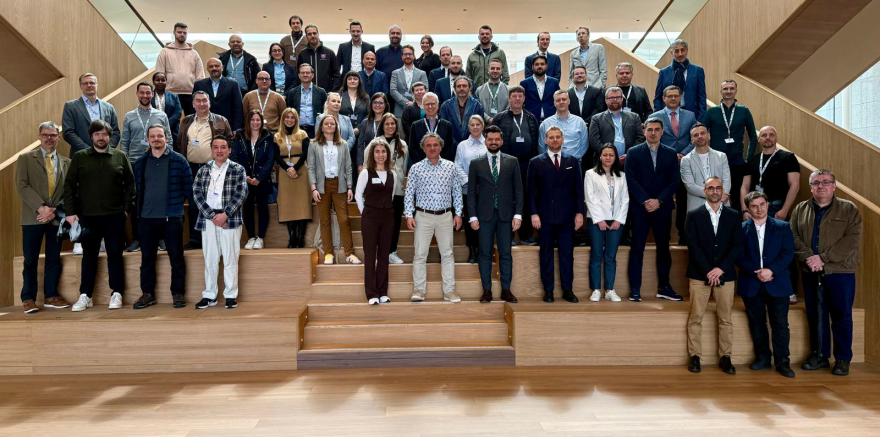
Throughout 2025, eu-LISA delivered targeted training activities to support Member States in the effective use of EU large-scale IT systems in the areas of migration, asylum and internal security. The training helped national authorities prepare for both the operational use of existing systems and the implementation of systems under development.
Delivering training at scale
During the year, the eu-LISA delivered 34 new training activities. These were integrated into the Agency’s Learning Management System (LMS), which hosts more than 110 training resources. In total, over 3,400 participants from Member States and partner organisations accessed training through the LMS.
Training covered the full lifecycle of eu-LISA systems and was delivered mainly online, allowing for broad participation. Subject-matter expertise from colleagues working directly on the systems and related programmes played a key role in training delivery.
Face-to-face training with Member States
Alongside online activities, eu-LISA continued to deliver face-to-face training in close cooperation with Member States. In 2025, three in-person courses were hosted by national authorities in Estonia, France and Italy. These sessions focused on SIS AFIS, cooperation between Single Points of Contact for EES, Eurodac and VIS, and new SIS functionalities for SIRENE bureaux, supporting operational cooperation and knowledge exchange.
In addition, eu-LISA delivered specialised training under the EMPACT priority on combatting migrant smuggling. Organised with the European Commission, Frontex and Europol, the training took place at eu-LISA headquarters in Tallinn and focused on how EES, ETIAS and Interoperability can support this policy area. Almost 150 participants attended face-to-face training activities during the year.
Developing online learning
Online learning remained a central part of the training programme. In 2025, eu-LISA launched its first scenario-based online module, introducing practical use cases to explain interoperability between large-scale IT systems.
The “Code of Identity” programme, dedicated to biometrics, was further expanded with additional webinars and microlearning modules. Training related to interoperability, biometrics, border management and core systems such as EES and Eurodac continued to attract strong interest across Member States.
Cooperation with EU partners
eu-LISA continued to work closely with EU partners and stakeholders. In November, the Agency hosted the Annual National Contact Point Meeting at its headquarters in Tallinn, where the Training Plan for 2026 was presented. The Agency also participated in the Justice and Home Affairs Agencies Network exchange programme and contributed to training activities organised by CEPOL and Frontex.
Training under eu-LISA’s mandate
Providing training is an integral part of eu-LISA’s legal mandate. The regulations establishing the Agency and governing the large-scale IT systems under its responsibility task eu-LISA with supporting Member States, including through training on the technical use, operation and development of these systems. Through its training activities, eu-LISA supports consistent implementation of EU legislation and the secure, harmonised use of shared IT systems across the European Union.